
The Definitive Guide to LED Display Aspect Ratios: 16:9 vs 4:3 Explained
Date: 2025-12-10 Categories: LED Display University Hits: 3228
Across televisions, computer monitors, and professional digital signage, the 16:9 aspect ratio reigns supreme as the universal format. This widescreen standard has fundamentally shaped modern visual communication, establishing itself as the default for commercial LED video walls and digital advertising.
A 16:9 LED display delivers content from HD to 8K in perfect, full-screen fidelity. It eliminates image stretching, cropping, and unsightly black bars, ensuring visuals appear exactly as creators intended—crisp, proportional, and powerfully impactful.
While older 4:3 displays remain in some legacy or specialized installations, the reality is that nearly all contemporary digital media—from broadcast television and streaming content to presentation slides and digital ads—is produced for a 16:9 canvas. This guide explores why 16:9 became the dominant format, how it compares to alternatives, and how to select the optimal screen ratio for your next LED installation.
Table of Contents
1.Understanding Screen Aspect Ratios
2.What Is a 16:9 Aspect Ratio LED Display?
3.Why 16:9 is the Industry Standard
4.Technical Design Requirements for 16:9 Displays
5.Calculating 16:9 Screen Dimensions
6.4:3 vs. 16:9: A Practical Comparison
7.Choosing the Right LED Screen Ratio
8.Frequently Asked Questions (FAQs)
9.Summary & Next Steps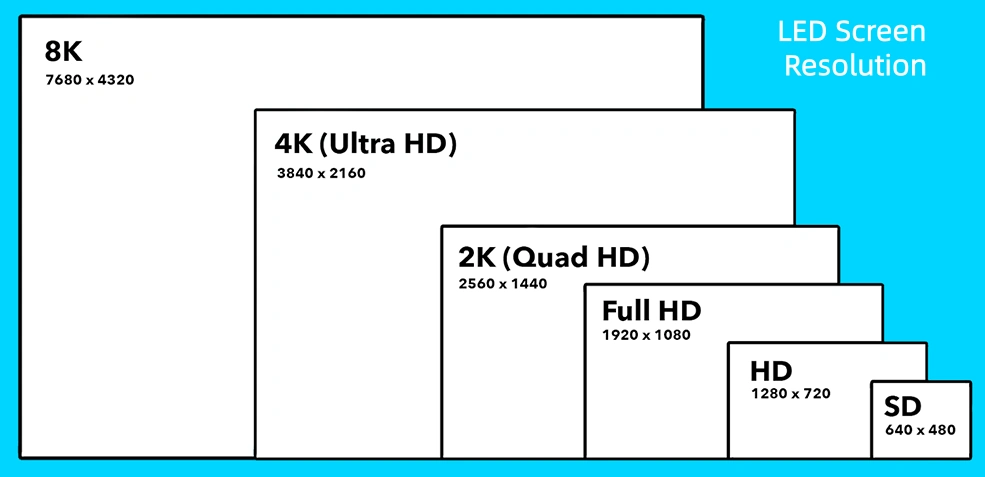
1. Understanding Screen Aspect Ratios
The screen ratio, or aspect ratio, defines the proportional relationship between a display's width and its height. Expressed as two numbers separated by a colon (e.g., 16:9, 4:3, 21:9), it describes the screen's shape, not its physical size.
This ratio is critical because it dictates how content fills the screen. When the content's aspect ratio matches the display's, viewers experience a perfect, full-screen presentation with accurate proportions. A mismatch leads to compromised visuals: images may appear stretched, squashed, cropped, or framed with blank letterbox bars.
Why Ratio Matters for LED Displays
Selecting the correct aspect ratio influences several key performance areas:
Visual Integrity: Preserves the original artistic composition and proportions of the content.
Content Compatibility: Ensures seamless playback without manual resizing or pixel loss.
Installation Planning: Directly impacts cabinet configuration and overall screen dimensions.
Media Adaptability: Guarantees alignment with standard broadcast and digital video formats.
Future-Proofing: Maintains relevance with evolving HD, 4K, and 8K media standards.
For any commercial LED project, choosing the right aspect ratio is as essential as selecting pixel pitch or brightness.
Common Aspect Ratios in Use Today
4:3 (Traditional): Once the standard for early TVs and monitors, now primarily used in specific control rooms, legacy systems, or vertically constrained spaces.
16:9 (Modern Standard): The dominant format for all commercial displays, perfectly matching HD, Full HD, UHD, and 4K/8K video. It offers universal compatibility and efficient resource use.
16:10 (Computing): Offers slightly more vertical workspace, popular in some professional workstations but less common in mainstream LED advertising due to scaling requirements.
21:9 (Ultra-Wide/Cinematic): Provides an immersive, cinema-like experience for high-end, creative installations, though it often requires custom content.
32:9 (Super Panoramic): Essentially two 16:9 screens side-by-side, used for immersive environments and multi-window applications requiring an extreme horizontal field of view.
2. What Is a 16:9 Aspect Ratio LED Display?
A 16:9 display, often called "sixteen-by-nine," maintains a precise proportion: for every 16 units of width, the screen measures 9 units in height. This creates a widescreen format where the width is approximately 1.78 times the height (hence the alternate notation 1.78:1).
This balance provides ample horizontal space for dynamic content while retaining sufficient vertical height for comfortable viewing, making it the ideal canvas for most modern media.
3. Why the 16:9 Ratio Became the LED Industry Standard
The widespread adoption of 16:9 is driven by concrete benefits that simplify deployment and enhance performance.
Universal Content Compatibility: From Netflix and YouTube to live broadcast feeds and corporate PowerPoints, virtually all modern media is authored for 16:9. This plug-and-play compatibility eliminates pre-processing, saving time and preserving original video quality.
Modular Scalability: Standard LED cabinet designs often conform to 16:9 proportions, allowing installers to seamlessly build video walls of any size—from a small conference room display to a massive stadium screen—while maintaining the correct aspect ratio for easy future expansion.
Optimized Viewing Experience: The widescreen format closely matches the human field of view, reducing eye strain and creating a more cinematic, engaging experience for audiences in retail, events, or public spaces.
Native Hardware Support: Leading video processors and controllers are optimized for 16:9 output, ensuring superior image scaling and dynamic quality preservation.
Cost-Effectiveness & Future-Proofing: As the global standard, components for 16:9 displays are more readily available and often more affordable. Investing in 16:9 ensures long-term compatibility with evolving content standards.
Considerations for Other Formats
While 16:9 is the versatile leader, other ratios excel in specific scenarios:
Ultra-Wide Content (21:9/32:9): A standard 16:9 screen would show black bars with cinematic content, reducing immersion.
Vertical-First Applications: Portrait-oriented displays like digital menus or social media walls are better served by vertical ratios (9:16, 3:4).
Architectural Constraints: Narrow or unusually shaped spaces may demand custom aspect ratios.
Landmark Displays: For maximum visual dominance in large public squares, extra-wide formats can sometimes create a more dramatic presence.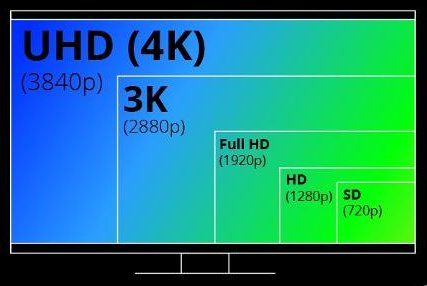
4. Technical Design Requirements for a 16:9 LED Display
Successful implementation relies on careful technical planning.
Pixel Pitch Selection: Choose based on viewing distance. Fine pitches like P1.25-P1.86 are ideal for close-viewing indoor screens, while P3.91-P4.81 suits longer-distance outdoor displays.
Brightness Specification: Indoor displays typically require 600–1200 nits, while outdoor screens need 4000–6500 nits to combat direct sunlight and maintain image vibrancy. Uniform brightness across the entire 16:9 canvas is critical.
Cabinet Configuration: Displays are built using modular cabinets. Standard 16:9-compliant sizes (e.g., 500x500mm or 600x337.5mm) allow for flexible matrix assembly (e.g., 3 cabinets wide by 5 cabinets tall) to achieve the desired total resolution and physical size, from small meeting rooms to large-scale event walls.
5. How to Calculate 16:9 Screen Dimensions
The 16:9 ratio provides a constant proportional relationship, allowing easy calculation of width, height, or diagonal size.
Basic Formula: Height = (Width × 9) / 16; Width = (Height × 16) / 9.
From Diagonal (Inches): A quick estimation: Width (in) ≈ Diagonal × 0.87; Height (in) ≈ Diagonal × 0.49.
In Pixels: Standard resolutions that are natively 16:9 include 1280x720 (HD), 1920x1080 (Full HD), 3840x2160 (4K UHD), and 7680x4320 (8K UHD).
This scalability means a 16:9 LED wall can be built to virtually any size while maintaining perfect format compliance.
6. 4:3 vs. 16:9 in LED Displays: A Side-by-Side Look
| Feature | 4:3 Aspect Ratio | 16:9 Aspect Ratio |
| Screen Shape | More square, taller | Widescreen, cinematic |
| Best For | Legacy systems, control rooms, vertical data display | Modern video, advertising, events, presentations |
| Content Compatibility | Poor for modern HD video; causes letterboxing or cropping | Excellent; native support for HD, 4K, 8K, streaming |
| Viewing Experience | Can feel constrained; ideal for direct, front-on viewing | Immersive; matches human field of view for wider audiences |
| Installation Flexibility | Fits narrow/vertical spaces well | Highly modular; easy to scale using standard cabinets |
| Future-Proofing | Limited, as media standards have moved on | High, as it is the enduring global standard |
7. How to Choose the Right LED Screen Ratio
Follow this decision framework for your project:
Audit Your Content: If your primary content is video, presentations, or broadcast media, 16:9 is almost always the correct choice.
Analyze the Application: Conference rooms, auditoriums, and retail advertising favor 16:9. Control rooms may use wider 21:9 formats, while creative installations might explore square (1:1) or vertical (9:16) ratios.
Measure the Installation Space: Assess the available wall or structure. Wide spaces accommodate 16:9/21:9; tall, narrow spaces may suggest a vertical format.
Consider Viewing Dynamics: Factor in the audience's typical distance and sightlines. Wider ratios offer better viewing angles for dispersed crowds.
Evaluate Budget & Logistics: Standard 16:9 designs typically offer lower costs and faster deployment due to readily available components and simplified engineering.
For the majority of commercial, corporate, and entertainment applications, a 16:9 aspect ratio LED display delivers the optimal balance of performance, compatibility, and value.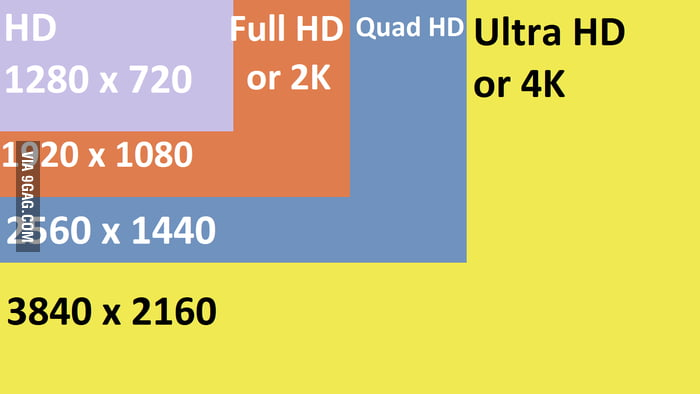
8. Frequently Asked Questions (FAQs)
Q: What are common 16:9 resolutions?
A: 1280x720 (HD), 1920x1080 (Full HD), 3840x2160 (4K UHD), and 7680x4320 (8K UHD).
Q: Why is 16:9 ideal for advertising?
A: It matches the format of nearly all produced video and graphic content, ensuring full-screen, high-impact playback without distortion.
Q: Can LED screens be custom ratios?
A: Yes. While 16:9 is standard, manufacturers like ABXLED can configure cabinets to create custom aspect ratios like 21:9, 1:1, or 9:16 for specialized projects.
Q: Is 16:9 suitable for large video walls?
A: Absolutely. Its modular nature makes it perfectly scalable for massive installations, from indoor lobbies to outdoor stadium screens.
Q: How do I ensure my screen displays native 4K?
A: Ensure the total pixel count of your LED wall configuration equals 3840x2160 and that your video source and processor support 4K output.
9. Conclusion
The choice between a 4:3 and a 16:9 LED display hinges on your specific content strategy and application environment. Today, the 16:9 aspect ratio stands as the undisputed industry standard, offering seamless compatibility with contemporary media, a superior viewing experience, and straightforward scalability.
While 4:3 retains its place in niche legacy or vertical applications, 16:9 provides the most reliable, future-proof foundation for virtually all commercial, educational, and entertainment display projects. By carefully considering your space, audience, and content, you can select the ratio that maximizes both visual impact and long-term return on investment.
Ready to design your optimal LED display? Contact ABXLED today. Our experts will help you customize a display solution—whether standard 16:9 or a custom format—that perfectly fits your project's unique requirements and vision.