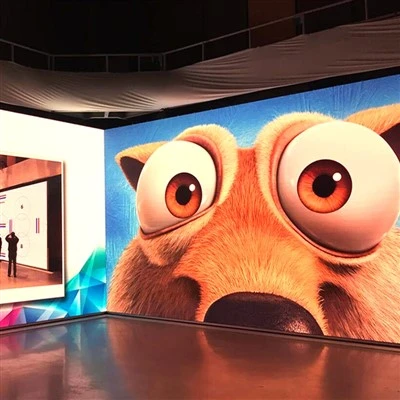

The display principle of a trailer-mounted LED screen is fundamentally the same as that of a standard LED display; it utilizes a vast array of LED beads to form pixels, with a control system managing the brightness and color of these beads to create a complete image. Typically composed of red, green, and blue elements, the LED beads can produce a wide spectrum of colors by adjusting the brightness ratios of these three primary colors. When content-such as video, images, or text-is input from a computer, media player, or camera, video processing equipment handles the signal before a transmission unit sends it to the LED screen's receiving card. The receiving card distributes data to individual display modules, where drive circuits control the LED beads based on the data, ultimately converting the digital input into dynamic visuals visible to the audience.
In addition to the display system, trailer-mounted LED screens integrate mobility and lifting mechanisms. The entire display unit is mounted on a trailer chassis, allowing for transport between locations via vehicle towing. Upon arrival at the designated site, the trailer is parked and secured, and a hydraulic, electric, or other mechanical system lifts the LED screen to the appropriate height. Some units also feature folding or unfolding mechanisms to expand the display area. Support devices ensure stability once the unit is deployed, preventing the screen from swaying during operation. Through the coordination of mechanical structures and control systems, the unit can be transported, deployed, raised, and stowed away quickly, meeting the demands of temporary outdoor events.
As trailer-mounted LED screens are primarily used outdoors, their technical design must address power supply, environmental protection, and heat dissipation. Depending on the situation, the unit can be powered by the mains grid, a generator, or an energy storage system to supply the necessary electricity to the LED screen, control system, and lifting mechanism. Since the LED screen and control equipment generate heat during prolonged operation, effective heat dissipation structures are required to vent the heat. Furthermore, the screen housing must be dustproof and waterproof to withstand outdoor conditions such as rain and dust. Some units also support remote control via wireless networks, enabling content updates, brightness adjustments, and operational status monitoring. Through the coordinated operation of multiple systems-including display, control, mechanical lifting, power supply, and protection-the trailer-mounted LED display enables integrated mobility, deployment, and display functionality.