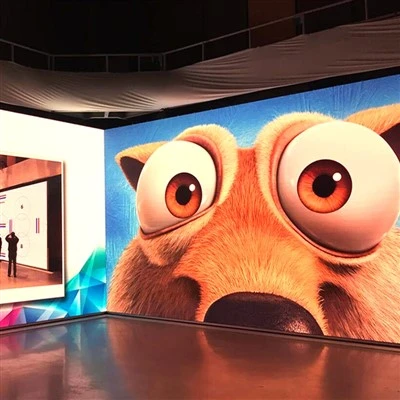

The primary advantage of transparent LED screens is their high light transmittance; they display images without completely obscuring the architectural structures or natural light behind them. Typically featuring specialized light-strip structures and open-frame designs, these screens offer a degree of transparency. Consequently, when installed on glass curtain walls, retail storefronts, or building facades, they allow for the display of advertisements or promotional content while maintaining natural light penetration. Compared to traditional LED displays, transparent screens have a minimal impact on a building's original appearance, making them ideal for locations where natural lighting and architectural aesthetics are priorities. During the day, the building structure behind the screen remains partially visible, while at night, the active screen creates dynamic visual effects, offering significant decorative value.
Transparent LED screens are also characterized by their lightweight structure, ease of installation, and minimal space requirements. Thanks to their specialized design, they are generally lighter than traditional cabinet-style LED displays, placing less structural load on the building. Furthermore, their slim profile minimizes the space they occupy. They can be custom-fabricated to fit specific glass curtain walls, storefronts, or architectural features and installed via methods such as suspension or direct mounting. Their transparency ensures that even when installed across large glass areas, they do not compromise the visual integrity of the surrounding space, making them highly valuable for commercial buildings and exhibition venues.
Transparent LED screens also offer distinct advantages in terms of display capabilities and commercial applications. Capable of displaying images, videos, text, and animations, they meet a wide range of needs, including advertising, brand showcasing, stage backdrops, and commercial events. When used on storefronts or glass facades, they seamlessly integrate advertising content with the architecture itself, transforming the screen from a mere display device into an integral part of the building's visual design. Additionally, these screens can be manufactured in various sizes and shapes to suit specific installation sites, with control systems enabling image switching and remote content updates. For venues that require a balance between advertising, natural lighting, and overall aesthetics, transparent LED screens provide an excellent harmony between display performance and spatial visual appeal.