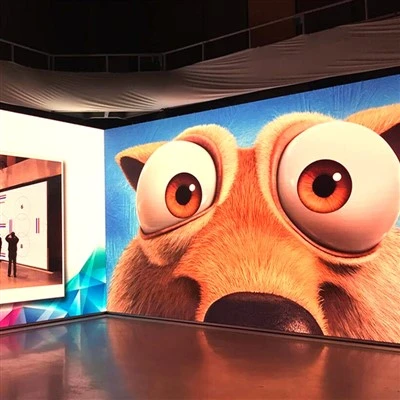


Since the screen is installed directly on the ground and must withstand the pressure from foot traffic and certain equipment, the display cabinets and support structures require sufficient strength. During the design process, materials, dimensions, and load-bearing structures must be determined based on the specific application scenario, and internal support components must be strategically placed to ensure weight is evenly distributed across the entire screen. Additionally, the screen surface requires a wear-resistant, anti-slip protective layer to safeguard the LED components and circuitry while minimizing the risk of slips and falls. For venues requiring frequent setup and teardown, a modular design should be adopted to allow for the rapid installation, removal, and replacement of individual display units.
Display quality is another critical factor in the design of LED floor screens. Appropriate pixel pitch and resolution must be selected based on viewing distance, screen size, and content to ensure image clarity. Because the viewing angles for floor screens differ from those of standard wall-mounted LED screens, horizontal and vertical visibility must be considered to ensure a high-quality visual experience for viewers in various positions. In stage applications, floor screens often operate in tandem with wall-mounted LED screens, lighting, and sound systems; therefore, the control system requires robust signal processing and synchronization capabilities. Furthermore, interactive sensing features can be integrated-using pressure sensors, infrared detectors, or other devices to track the location and movements of people-allowing the screen to update visuals in real-time based on audience behavior and thereby enhancing the interactive experience.
Safety and environmental adaptability are also essential considerations in the design process. Given the equipment's constant contact with the ground, waterproofing, dustproofing, and heat dissipation mechanisms must be effectively designed-particularly for outdoor use, where protective measures must be tailored to the specific environment. Internal power and signal cabling require strategic routing to prevent damage from trampling or compression, while adequate heat dissipation must be ensured to prevent overheating during prolonged operation. In high-traffic areas such as stages, factors such as the height difference between the screen and the floor, edge finishing, and overall anchoring methods must be addressed to ensure safe pedestrian movement. By comprehensively addressing structural integrity, display quality, interactivity, safety, and maintenance, LED floor screens can deliver reliable performance while effectively meeting the diverse needs of stages, exhibitions, and commercial events.