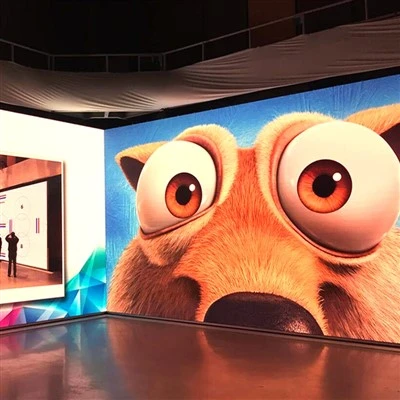

The core components of a stage LED display screen primarily include LED display modules, drive circuitry, and display cabinets. The LED display module serves as the fundamental display unit of the screen; typically composed of LED beads, a PCB, and associated electronic components, a large number of these modules are assembled in a specific configuration to form the complete display area. The LED beads are responsible for light emission, creating various colors through the combination of red, green, and blue light. The drive circuitry controls the illumination state and brightness of the beads, enabling each pixel to display content based on input image data. The display cabinet houses and secures the display modules, protects internal circuitry, and facilitates the screen's transport, installation, and disassembly.
The control system is crucial for the proper operation of the stage LED display, primarily handling the reception and processing of external video signals and transmitting the processed data to the display. Common equipment includes sending cards, receiving cards, video processors, and control computers. Video processors perform operations such as scaling, switching, and cropping on input video feeds, allowing video signals of various specifications to match the display's resolution. Sending devices transmit the processed data to the screen, while receiving cards distribute the data to the corresponding display modules in a specific sequence. Through the coordination of these devices, functions such as video playback, multi-screen synchronization, image switching, and real-time display are achieved, meeting the visual requirements of diverse stage performances.
In addition to the display and control components, the power supply system, heat dissipation system, and cabling are vital parts of the LED display. The power supply system converts external AC power into the stable DC power required by the display, providing the necessary energy for the LED beads and control circuitry. Since LED displays generate heat during prolonged operation, heat dissipation structures within the cabinets, fans, or other cooling methods are employed to expel heat promptly and ensure stable equipment performance. Power and signal cables connect the display cabinets, ensuring proper power delivery and data transmission across modules. All components of the system work in concert-from video signal input and data processing to the final illumination of the LED beads-to collectively produce the visual display on stage.