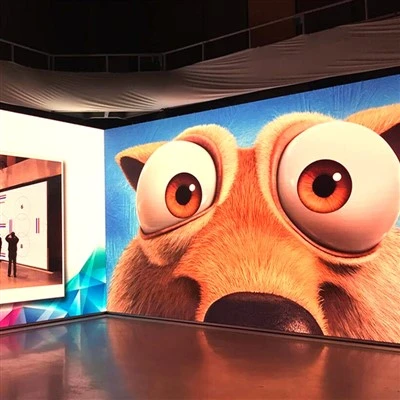


The design of indoor LED displays primarily utilizes LEDs as the fundamental display units; a vast array of pixels arranged in specific rows and columns forms a complete image. Each pixel typically consists of red, green, and blue LED components; by controlling the brightness ratios of these three colors, a wide range of colors and images can be produced. During the design phase, the pixel pitch must be determined based on the screen's physical dimensions and the intended viewing distance to ensure a clear image for the audience. Additionally, parameters such as resolution, brightness, grayscale levels, and color reproduction must be considered to ensure the display meets the requirements of the indoor environment.
Indoor LED displays rely on control systems to handle the reception, processing, and transmission of video signals. External devices-such as computers, cameras, or media players-send video signals to a video processor. After undergoing processes like scaling, cropping, and format conversion, the signals are transmitted to the LED display. Receiving cards manage data reception and distribution, relaying the relevant display information to individual LED modules, while drive circuits control the brightness and color of the LEDs based on this data. This process synchronizes the operation of numerous LED pixels in terms of timing and data, creating seamless, complete static or dynamic images. When a display is composed of multiple cabinets, unified control across different zones is required to maintain image synchronization between sections.
Factors such as the installation environment, heat dissipation, power supply, structural safety, and long-term maintenance must also be comprehensively considered. Indoor LED displays are typically installed in venues like conference rooms, exhibition halls, and stages; therefore, screen size and placement must be determined based on the specific space to ensure optimal viewing angles for the audience. Since the display generates heat during operation, the heat dissipation structure must be well-designed to prevent overheating during prolonged use. The power supply system must be configured according to the screen's surface area and power consumption, with power and signal cables routed efficiently. For large-scale displays, the mounting method and load-bearing capacity of the cabinets are also critical considerations. By integrating the design of display, control, structural, power, and thermal management systems, indoor LED displays can achieve excellent stability, safety, and maintainability while delivering high-quality visual performance.