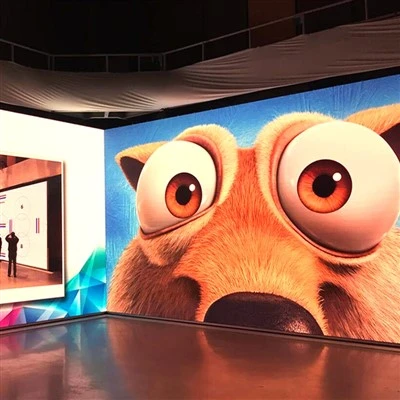

When purchasing an outdoor LED advertising display, the first step is to determine the appropriate specifications based on the installation environment and viewing distance. Different installation locations-such as roadside, building facades, or large commercial plazas-impose varying requirements regarding screen size, installation height, and the distance between the audience and the screen. Pixel pitch is a crucial parameter; a finer pitch yields a sharper image but increases equipment costs, whereas a larger pitch is suitable for screens installed at greater heights or viewed from further away. Brightness must also be selected based on ambient lighting conditions to ensure the advertisement remains clearly visible in strong daylight while allowing for reduced brightness at night.
Outdoor environments demand high levels of protection for LED displays; therefore, key factors to consider include waterproofing, dustproofing, heat dissipation, and structural integrity. Since these displays are permanently installed outdoors and exposed to elements like rain, dust, and temperature extremes, it is essential to choose products with appropriate protection ratings that match the specific installation environment. For installations in coastal areas or regions with high humidity, corrosion resistance is another critical factor. The cabinet materials and structure must be robust-especially for large screens-to withstand external forces such as wind loads. Heat dissipation is equally important; prolonged operation generates heat in LED beads, power supplies, and driver circuits, so an effective thermal design helps minimize the risk of failure during long-term use.
Other factors to consider include the control system, power consumption, maintenance requirements, and after-sales service. Buyers should verify compatibility with common video and image formats, as well as the ability to perform remote control and content updates via computer or network. For advertising screens intended for continuous operation, power consumption and operational stability are vital; proper power supply configuration is necessary to avoid issues like insufficient power or prolonged overloading. Given the typically large size of outdoor LED displays, long-term maintenance costs are a significant consideration; it is advisable to choose products with a rational design that facilitates easy repairs and to understand the replacement procedures for components such as LED modules, power supplies, and control cards. Finally, one should clarify the warranty period, technical support availability, and after-sales repair services. Only by comprehensively considering factors such as screen size, pixel pitch, brightness, protection performance, power consumption, control methods, and maintenance costs can one select an outdoor LED advertising display that best meets actual usage requirements.