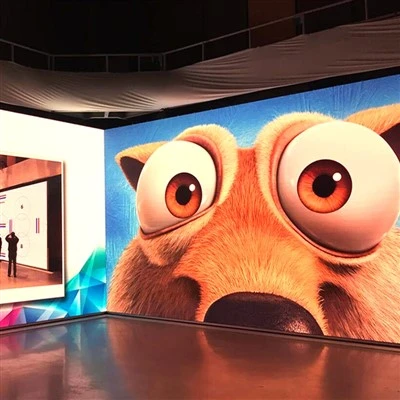

The production of outdoor LED advertising displays begins with the fabrication of LED display modules. Based on the required pixel pitch and specifications, LED beads are mounted onto a PCB according to a pre-designed layout, alongside electronic components such as driver chips, resistors, and capacitors. Once the components are placed, a soldering process ensures reliable connections to the circuit board, followed by inspections to detect issues like cold solder joints, short circuits, or missing solder. The completed modules then undergo power-on testing to verify that the LEDs illuminate correctly, colors are uniform, and the display quality is free of anomalies. After passing these checks, the modules undergo further assembly and protective treatments in preparation for integration into the complete LED display cabinet.
Following the completion of the display modules, the cabinet and structural components are assembled. Outdoor LED advertising displays typically utilize a metal cabinet structure, which houses the display modules, power supply, receiving card, and associated wiring. During assembly, component placement is determined by design blueprints, and power and signal lines are connected. Because outdoor displays must withstand rain, dust, and temperature fluctuations, the production process includes waterproofing, dustproofing, and sealing the cabinet, as well as verifying its structural integrity and heat dissipation capabilities. Once the cabinets are assembled, multiple units are joined according to the actual screen dimensions; the flatness and connections between adjacent cabinets are inspected to ensure the entire screen forms a seamless, unified display area.
Finally, the system undergoes power-on commissioning and quality inspection. First, the stability of the power supply system is verified; then, control equipment is connected to adjust parameters such as brightness, color, grayscale, and refresh rate. By displaying test patterns in various colors, technicians check for issues such as dead pixels, uneven brightness, color discrepancies, or localized display anomalies. Simultaneously, the screen's waterproofing, heat dissipation, signal transmission, and long-term operational stability are evaluated. Large-scale outdoor LED displays also undergo continuous operation tests to ensure equipment stability over extended periods. Only after all inspection criteria are met does the product proceed to packaging, shipping, and on-site installation. The entire production process encompasses multiple stages-including electronic component processing, module fabrication, structural assembly, protective treatment, and system debugging-with the quality of each stage impacting the final display screen's visual performance and service life.