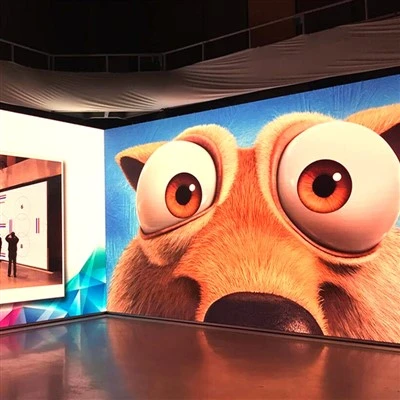


The primary components of an indoor LED display screen include LED beads, display modules, and cabinets. Indoor screens typically utilize fine pixel pitches-such as P1.25, P1.5, P1.86, P2.0, or P2.5-to ensure image clarity for close-range viewing; a smaller pixel pitch results in a higher pixel density per unit area and richer image detail. Display modules generally consist of LED beads, PCBs, and driver chips; multiple modules are assembled to form a complete display unit. The cabinet serves to secure and protect the components; indoor screens usually employ lightweight cabinet structures to facilitate installation, disassembly, and maintenance.
The control system is a critical component of the indoor LED display, comprising elements such as sending devices, receiving cards, video processors, and control computers. Content-whether video, images, or text-is output from a computer and processed by a video processor, which handles signal scaling, switching, and adjustments based on the screen's actual resolution. The processed signal is transmitted to the LED display via the sending device, while receiving cards distribute data to individual display modules, ensuring synchronized content across the entire screen. For large-scale indoor screens, the number of sending and receiving cards can be increased as needed, and multi-screen control allows for image synchronization across different zones, meeting the requirements of venues such as conference rooms, stages, exhibition halls, and commercial spaces.
Indoor LED displays also require auxiliary equipment, including power supplies, cabling, and heat dissipation systems. Power supplies convert input AC power into the DC power required by the LED beads and control circuitry, ensuring stable operation for the entire system. Since indoor screens are often installed in relatively enclosed environments, effective heat dissipation is crucial; heat generated during operation must be promptly vented through cabinet design, natural convection, or fans. Additionally, components such as power cables, signal cables, and connectors must be selected based on the screen size and installation method. Overall, the configuration of an indoor LED display depends on factors such as screen size, viewing distance, installation environment, and specific usage requirements; only through the harmonious integration of all components can the screen deliver excellent visual performance and stable operation.