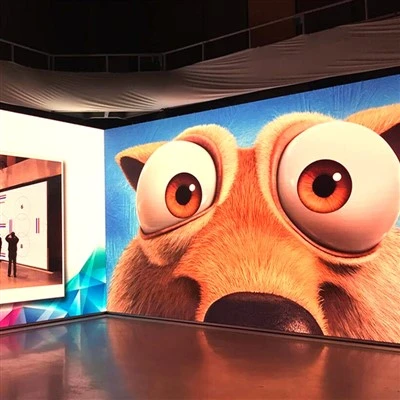


Outdoor LED advertising displays utilize a large number of light-emitting diodes (LEDs) to form pixels, displaying text, images, and video by controlling the illumination state of each pixel. Each LED pixel typically consists of red, green, and blue components; by adjusting the brightness ratios of these three colors, a wide spectrum of colors can be produced. Once advertising content is transmitted from a computer, media player, or other device to the display, the control system processes the input video signal. It converts the image data into specific control signals tailored to the display's resolution and pixel layout. These signals are then sent to individual LED display modules, causing the LEDs at various locations to illuminate at designated brightness and color levels, ultimately forming a complete advertising image.
The control system of an outdoor LED advertising display typically comprises a control computer, video processing equipment, a sending unit, and receiving cards. Playback equipment first supplies the video, image, or text content. This content undergoes format conversion, scaling, and signal adjustment via a video processor before the data is transmitted to the display screen by the sending unit. Receiving cards installed within the LED cabinets capture the data and distribute the relevant information to the various display modules and drive circuits. The drive circuits regulate the brightness and color of the LEDs based on the received data; when a vast number of pixels operate in unison according to a specific pattern, they create continuous, dynamic images. For large-scale outdoor displays, multiple cabinets can be assembled together, with the control system ensuring unified playback and image synchronization across the entire screen.
Because outdoor LED advertising displays operate in open-air environments, their design must account for environmental factors alongside standard image display requirements. Elements such as sunlight, rain, dust, and temperature fluctuations can impact performance; consequently, high-brightness LEDs are typically employed to ensure content remains clearly visible even in bright daylight. Furthermore, the display cabinets and modules must feature dust- and water-resistant capabilities, and the internal design must incorporate effective heat dissipation structures to prevent overheating during prolonged operation. At night, the control system can automatically reduce screen brightness, ensuring optimal viewing while minimizing unnecessary energy consumption. Through the coordinated operation of display modules, control systems, power supply systems, and protective structures, outdoor LED advertising displays are capable of delivering stable advertising content around the clock.